
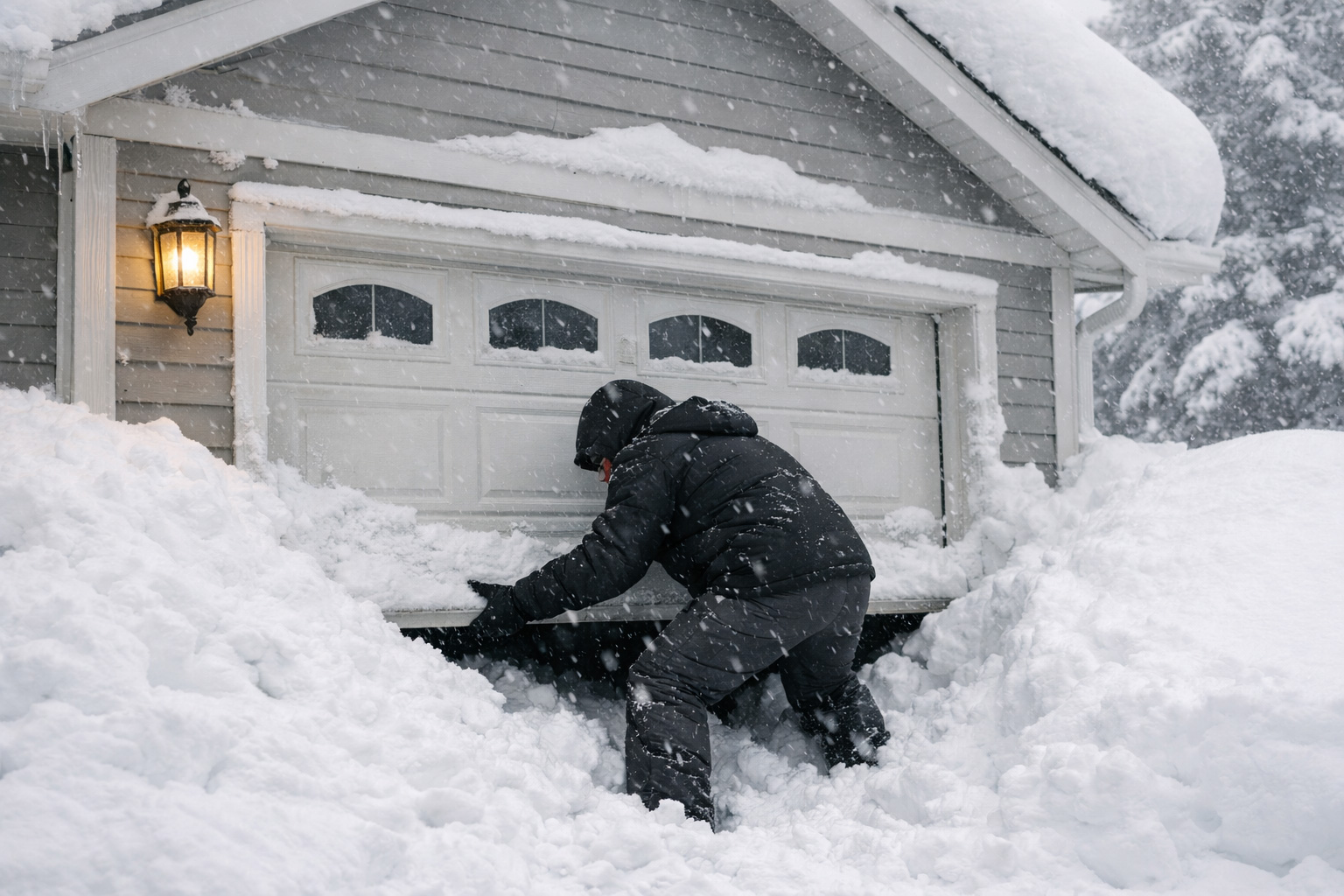
Winter in the Bay Area isn’t always “snowy,” but it is tough on garage doors. Cold nights, heavy rain, coastal moisture, and the occasional frost can make a door feel slower, louder, or harder to close.
Below are practical, homeowner-safe steps you can do in a few minutes. And just as important: what not to do when things look risky.
1) Why winter can stress your garage door
In colder weather, parts can contract slightly and lubrication can thicken. Moisture can also build up on sensors and hardware.
Common winter complaints include:
- The door sounds louder than usual.
- The opener strains or the door moves slowly.
- The door won’t close all the way (often due to sensor issues or seal resistance).
- The bottom of the door sticks to the ground after a cold, wet night.
2) Check the bottom seal and weatherstripping first
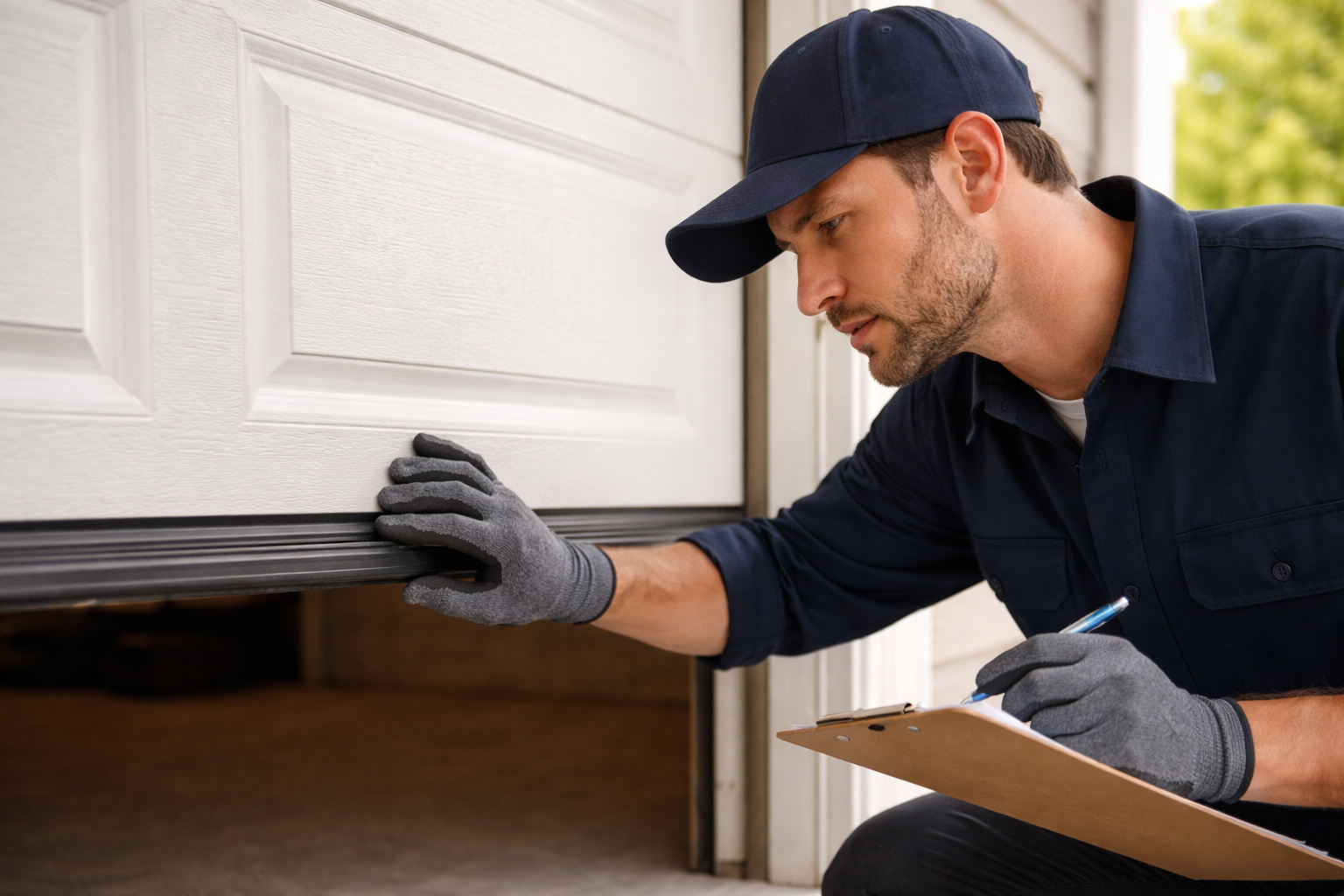
If your garage feels drafty or you see light under the door, your seals may be worn.
A quick check:
- Look at the bottom seal for cracks, gaps, or sections that look flattened.
- Check the side and top weatherstripping for tears or pulling away from the frame.
- After heavy rain, look for water lines or damp spots near the door opening.
A good seal helps with comfort, protects stored items, and reduces the chance of the door sticking.
3) Lubrication: a little goes a long way
Cold weather is when poor lubrication shows up fast.
Homeowner-safe guidance:
- Use a garage-door-rated lubricant (not heavy grease).
- Apply lightly to hinges, rollers (metal), and the spring (if accessible without reaching into hazardous areas).
- Wipe away excess. Too much lubricant attracts dirt.
Avoid these mistakes:
- Don’t “grease” the tracks. Tracks should generally be clean, not slippery.
- Don’t rely on general-purpose sprays as your main lubricant.
Safety note: If you see damaged springs, loose cables, or anything that looks frayed—stop and call a pro. Springs and cables are under high tension.
4) Prevent “stuck to the ground” problems (ice, frost, and wet nights)
If the bottom seal freezes to the ground, forcing the door can strain the opener and damage the seal.
Try these safer options:
- Clear debris and wipe standing water near the threshold.
- If the door feels stuck, stop and avoid repeated opener attempts.
- If you’re unsure, schedule a professional inspection rather than forcing it.
If you live in higher elevations or you drive to snowy areas and return with packed snow/ice, keep the door area clear and don’t let snow pile up against the bottom seal.
5) Opener health in winter: sensors, batteries, and settings
A lot of “winter door” issues are actually opener issues.
Check these:
- Photo eyes (safety sensors): wipe them gently with a clean, dry cloth. Moisture or dirt can cause false stops.
- Remote battery: if range feels weaker, it may just be a battery.
- Auto-reverse test: your door should reverse when it meets resistance. If it doesn’t behave normally, stop using it and get it inspected.
If your opener is older or struggling, it may be worth looking into a replacement service:
- Garage Door Opener Replacement Service
6) Reduce drafts and noise with smarter upgrades
If the garage is attached to your home, winter is when you feel the difference.
Consider:
- Better sealing (bottom seal + perimeter weatherstripping)
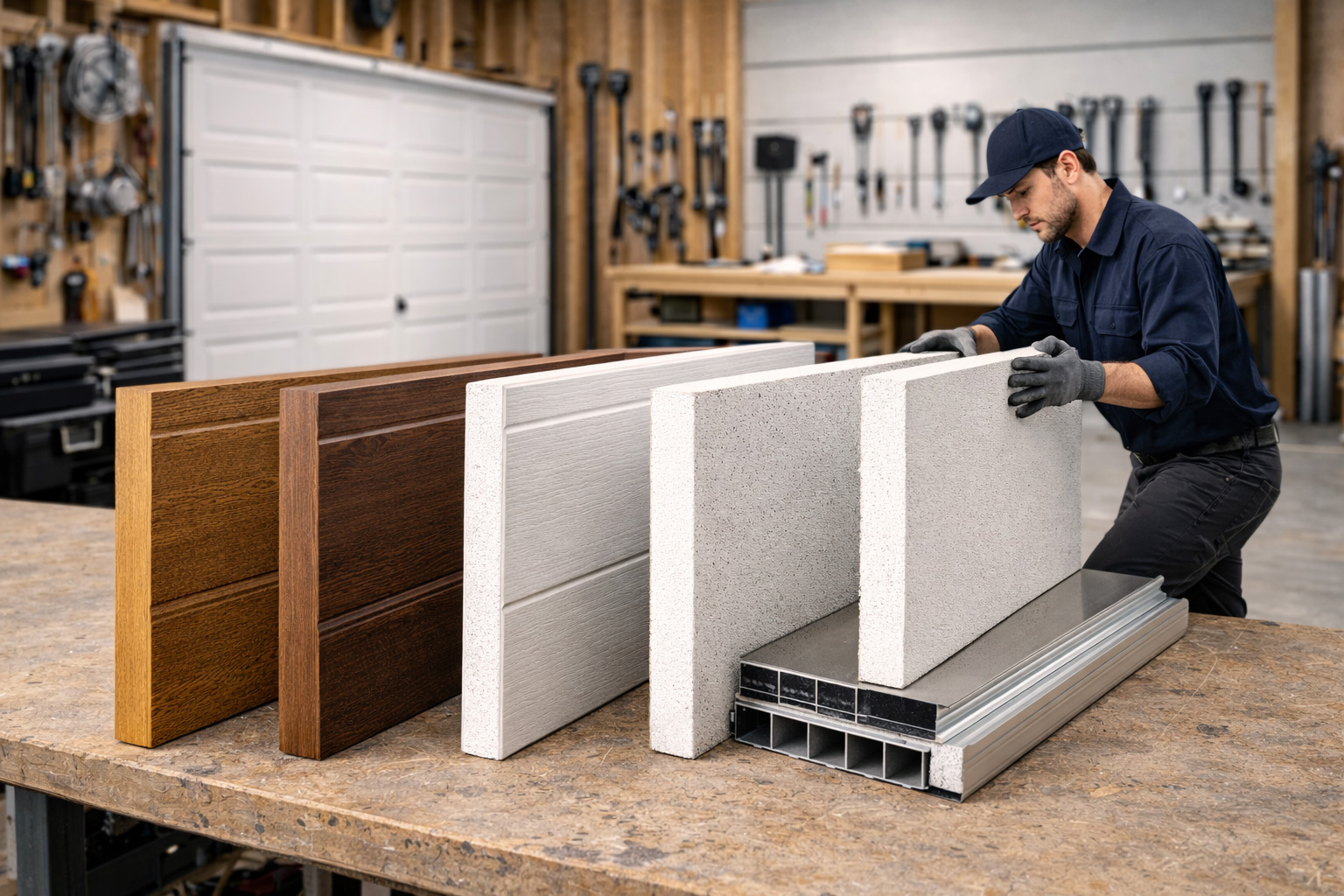
- Insulated doors (helpful for comfort and noise)
- Quieter rollers (nylon rollers can reduce noise in many cases)
Upgrades aren’t always necessary—but if your door is old, loud, or drafty, winter is a good time to evaluate options.
7) When to call a professional (don’t risk it)
Call for service if you notice:
- A loud bang from the garage (could indicate a spring issue)
- Frayed cables, loose hardware, or a door that looks uneven
- The door comes off track or binds while moving
- The opener strains, stalls, or keeps reversing unexpectedly
For repairs and inspections, you can book online here:
- Schedule a Garage Door Repair Appointment
Or learn more about repair service:
- Garage Door Repair
Winter garage door checklist (10 minutes)
FAQ
Why is my garage door louder in winter?
Cold can thicken lubrication and moisture can affect moving parts. A light tune-up and correct lubrication often helps.
My garage door won’t close all the way—what should I check first?
Start with the photo eyes (sensors). Clean and align them. If the door still won’t close, avoid forcing it and schedule an inspection.
Is it normal for my opener to struggle when it’s cold?
It can happen, especially if parts are dry, the door is heavier due to resistance at the seal, or the opener is aging. If it strains repeatedly, get it checked.
Should I DIY a spring or cable repair?
No. Springs and cables are high-tension parts and can be dangerous. If you suspect an issue, call a professional.
How often should I get a professional tune-up?
Many homeowners schedule inspections periodically (often annually). If you notice new noises, uneven movement, or frequent reversals, don’t wait.
Ready for a quick winter check?
If your door is loud, slow, or sticking, a professional inspection can prevent bigger problems.
Book an appointment online: Schedule service
Or contact the team here: Contact us