
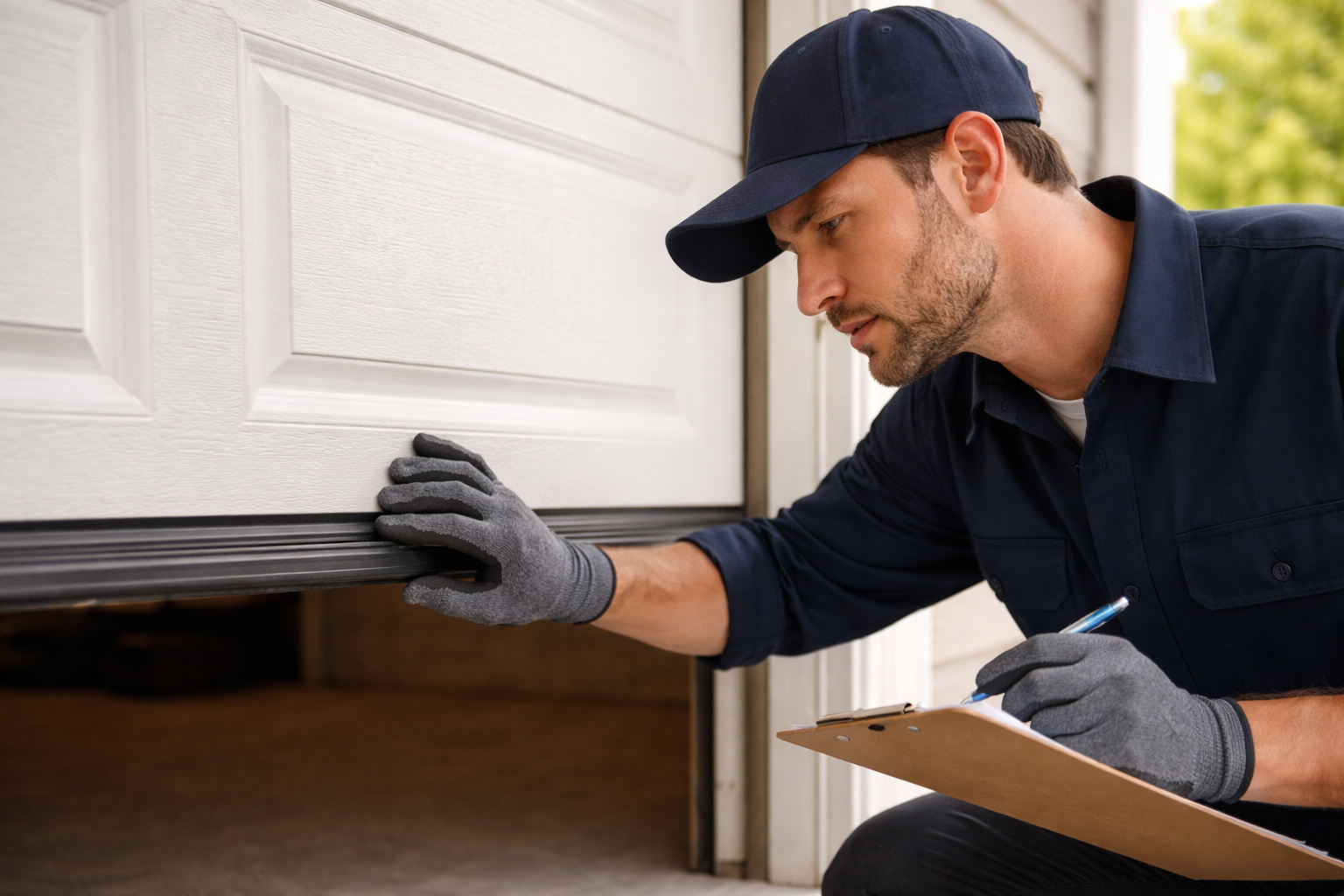
A garage door is the biggest moving “machine” in most homes. It opens and closes thousands of times a year. The funny part is: most maintenance problems don’t show up as a dramatic failure. They show up as small clues—noise, drag, uneven movement, or a door that just feels “off.”
If you want fewer surprise repairs, the goal is simple: catch the little problems early before they stress the opener, wear out parts, or create a safety issue.
Maintenance isn’t “DIY repair” (a quick safety note)
You can do a lot as a homeowner without taking risks. But there are components that should be handled only by trained technicians—especially anything involving springs, cables, or a door that’s off-track.
If you notice a broken spring, frayed cables, or the door looks uneven, don’t force it. Schedule a professional inspection.
The 10 most overlooked garage door maintenance issues
Below are the issues we see most often in the field—because they’re easy to miss until they turn into a bigger problem.
- Dirty or misaligned safety sensors
When sensors are dusty or slightly out of alignment, the door may refuse to close or reverse unexpectedly. This is one of the most common “nothing looks broken, but it won’t close” situations.
- Worn bottom seal and weatherstripping
A cracked seal can let water, drafts, pests, and debris into the garage. It can also add resistance at the bottom, making the opener work harder.
- Loose hardware from daily vibration
Garage doors vibrate every time they move. Over time, nuts and bolts can slowly loosen. That can lead to rattling, shifting tracks, or hinges that wear faster.
- Dry rollers and hinges (noise is a warning sign)
A squeaky or grinding door usually isn’t “just loud.” It often means friction is building up, which can shorten the life of rollers and hinges.
- Track issues that start small
Tracks don’t need to be slippery, but they do need to be clean and properly aligned. Minor bending, debris, or shifting can create rubbing that you feel as jerky movement.
- Opener strain caused by an unbalanced door
An opener is designed to guide the door—not lift a door that’s out of balance. If your opener seems to struggle, the door may be putting extra load on the system.
- Worn rollers you don’t notice until they fail
Rollers wear gradually. Many homeowners don’t realize they’re worn until the door becomes noticeably loud or starts binding.
- Old or weak remote batteries (and range issues)
If your remote starts working only when you’re close to the door, it may be a simple battery issue. It’s easy to overlook and easy to fix.
- Slow damage to panels from moisture and sun
In the Bay Area, moisture and temperature swings can affect materials over time. Small panel damage can turn into bigger alignment problems if ignored.
- Skipping routine tune-ups until something breaks
Most people wait until the door fails. Preventive maintenance can spot wear early, reduce noise, and help your system last longer.
A quick homeowner-friendly maintenance checklist
You don’t need to become a technician. This checklist is meant to be simple and safe:
- Check that the door looks even when closed (no obvious leaning)
- Listen for new noises (squeaks, grinding, popping)
- Make sure the door closes consistently (no random reversing)
- Look for gaps at the bottom seal and side/top weatherstripping
- Watch the door move: is it smooth, or does it hesitate/jolt?
- If anything feels unsafe (springs/cables/off-track), stop and schedule service
How often should you schedule professional maintenance?
Many homeowners schedule a tune-up every 6 to 12 months, depending on how often the door is used and the condition of the system.
A professional tune-up can include inspection, lubrication of key moving parts, safety checks, alignment adjustments, and identifying wear before it turns into a breakdown.
Learn more about what’s included:
- Garage Door Maintenance Service
FAQ
Why does my garage door get louder over time?
In many cases it’s friction, worn rollers, or dry hinges. Noise is often an early warning that parts are wearing faster than they should.
My garage door won’t close—does that mean it’s broken?
Not always. Sensors (photo eyes) are a common cause. If the door keeps reversing or won’t close consistently, it’s worth getting it inspected.
Is it safe to fix springs or cables myself?
No. Springs and cables are high-tension parts and can be dangerous. If you suspect an issue, schedule professional service.
What’s the difference between maintenance and repair?
Maintenance helps prevent failures (inspection, adjustments, lubrication). Repair fixes a specific problem (broken spring, off-track door, snapped cable, etc.).
When should I book service immediately?
If the door is off-track, uneven, slamming, or you see frayed cables—stop using it and get help right away.
Need help in Santa Clara or the Bay Area?
If your garage door is noisy, struggling, or just due for a tune-up, we can help.
- Book online: Schedule an appointment
- General repairs: Garage Door Repair
- Contact: Contact Us